
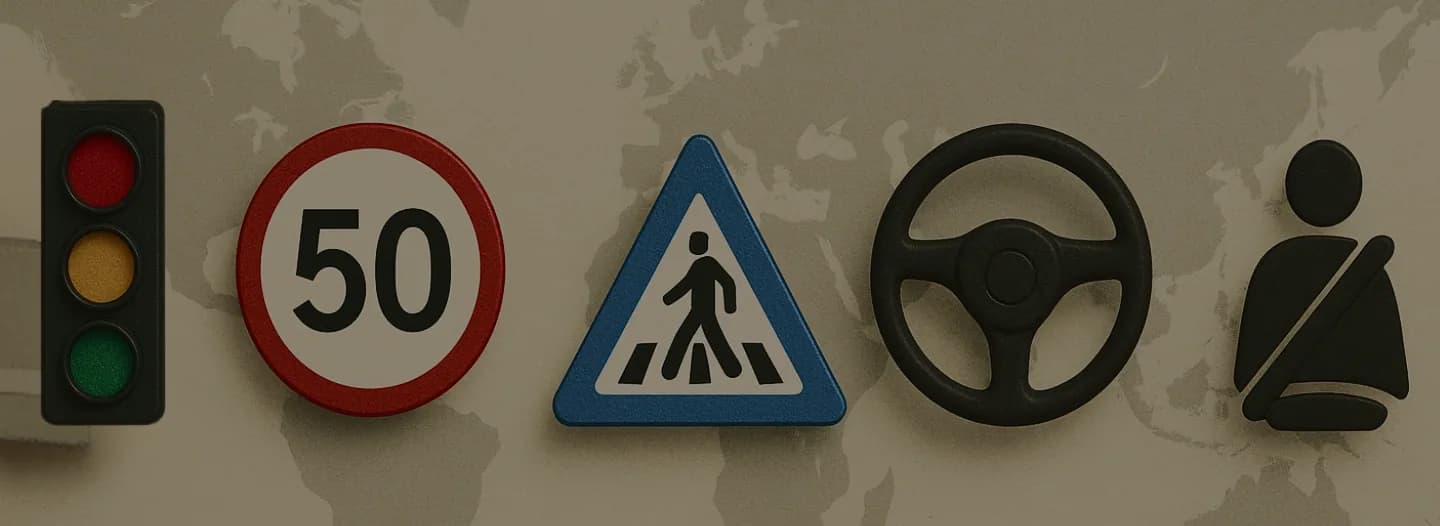
YalaRide - Greece Driving Rules & Regulations Guide
Updated & compliant with current Greece road safety standards
1. Overview of Driving in Greece
Driving in Greece offers access to islands, coastal roads, and historical cities. Roads vary from modern motorways to narrow rural routes, and traffic can be dense in major cities like Athens. Tourists must understand Greek road laws, required documents, safety equipment, and enforcement practices to ensure legal and safe travel.
2. Valid Driving License Requirements
To legally drive in Greece:
- EU/EEA licenses are fully valid.
- Non-EU visitors must hold both:
- Their home country license, and
- The International Driving Permit (IDP).
- Temporary digital licenses are not accepted unless officially recognized.
- Minimum driving age for car rental: 21 to 23, depending on rental company.
Drivers with licenses not printed in Latin characters must carry official translation or IDP.
3. Mandatory Vehicle Documents
Drivers must carry original, valid documents at all times:
- Driving License
- Vehicle Registration Certificate
- Insurance Green Card or Insurance Policy
- ID/Passport
- Rental contract (for rental vehicles)
- Proof of inspection (KTEO) for Greek-registered vehicles
Police can request documents at checkpoints or routine stops.
4. Speed Limits in Greece
Default national speed limits unless otherwise posted:
Road Type
Speed Limit
Urban Areas
50 km/h
Rural Roads
90 km/h
Expressways
110 km/h
Motorways
120–130 km/h (depending on signage)
Speed cameras are common, especially on major highways. Fines increase based on excess speed.
5. Priority Rules
- Vehicles coming from the right have priority unless signs indicate otherwise.
- Traffic circles (roundabouts): In Greece, entering traffic often has priority unless the roundabout has a “yield” sign.
- Pedestrians at zebra crossings always have priority.
- Emergency vehicles with lights/sirens must be given full right of way.
6. Seat Belt & Child Safety Rules
Seat Belts
- Mandatory for all passengers in front and rear seats.
Child Safety
- Children under 135 cm require an appropriate child seat.
- Rear-facing seats must not be placed in a seat with an active airbag.
- Taxis are exempt from providing child seats, but parents must secure children safely.
7. Mobile Phone Use
- Handheld phone use is strictly prohibited.
- Hands-free systems are allowed only if using:
- Bluetooth
- Car-integrated systems
Violation results in high fines and penalty points.
8. Alcohol & Drug Driving Laws
Legal Blood Alcohol Limit (BAC)
- General drivers: 0.05%
- Professional drivers: 0.02%
- Drivers with less than 2 years of experience: 0.02%
Drug testing is strict, and penalties are severe for driving under influence of alcohol or narcotics.
9. Road Signs & Language
- Most signs use international symbols.
- Text is typically in Greek, with major roads also displaying English.
- Drivers must understand European road signage, including:
- Priority signs
- Stop signs
- Motorway symbols
- Parking restrictions
10. Winter & Snow Equipment
- Snow chains are mandatory in mountainous or snowy areas when signs require them.
- Winter tires are recommended from November to March but not legally mandatory nationwide.
Rental drivers must install snow chains correctly when required.
11. Toll Roads in Greece
Many highways and bridges require toll payments.
Common Toll Roads
- A1 Athens–Thessaloniki
- A8 Athens–Patras
- Attiki Odos (Athens ring road)
- Rio–Antirrio Bridge (high toll)
Payment Methods
- Cash
- Credit/debit card
- Electronic tag (for Greek vehicles)
Rental vehicles may include an electronic toll tag with separate charges.
12. Driving in Cities
Athens & Thessaloniki
- Heavy traffic, limited parking, and restrictions in central areas.
- Athens has an environmental rule (Daktylios) restricting vehicles in the city center based on license plate number (odd/even days).
- Illegal parking is heavily fined and vehicles may be towed.
13. Parking Rules
- White lines: free or regulated parking
- Blue lines: paid parking
- Yellow lines: strictly no parking
- Sidewalk parking is prohibited
- Disabled parking rules are strictly enforced
Always display parking tickets when required.
14. Highway Driving Rules
- Keep right except when overtaking.
- Hazard lights must be used only in emergencies, not to warn drivers behind of police or checkpoints.
- Stopping on highways is prohibited except:
- Emergency lanes
- Breakdowns
- Police instructions
15. Roundabout Rules
Greek roundabout priority can differ from standard EU rules:
- If no yield sign, entering traffic has priority.
- If a yield sign is present, vehicles inside the roundabout have priority.
Always check signage before entering.
16. Motorcycle & Scooter Driving Rules
- Helmets are mandatory for all riders.
- Lane splitting is common but technically restricted.
- Visitors must:
- Hold a motorcycle-specific license
- Carry helmet and protective gear
Scooters under 50cc have separate rules within cities.
17. Traffic Fines & Penalties
Common Violations
- Speeding
- Illegal parking
- Driving without seat belts
- Using phone while driving
- Drunk driving
- Ignoring traffic signs
Important Notes
- Fines can be issued on the spot.
- Police may confiscate:
- License
- Plates
- Vehicle
- Rental drivers remain responsible for all violations.
- Unpaid fines may cause issues when exiting Greece or at rental return.
18. Fuel Types in Greece
- Unleaded 95
- Unleaded 100
- Diesel
- LPG (limited availability)
Self-service is common. Some islands have fewer fuel stations.
19. Emergency Numbers
- 112 – General European Emergency Number
- 100 – Police
- 166 – Ambulance
- 199 – Fire Brigade
Emergency signs are clearly marked on major roads.
20. Required Safety Equipment in Vehicle
Rental and private vehicles must carry:
- Warning triangle
- High-visibility vest
- First-aid kit
- Spare tire or repair kit
- Fire extinguisher (recommended)
Drivers must wear reflective vests when exiting vehicle on the road.
21. Environmental Zones
Only Athens has major restrictions through the Daktylios system.
Other cities may implement seasonal zones.
Rental vehicles may be exempt depending on policy.
22. Island Driving Rules
- Narrow roads and sharp curves are common.
- Many islands have strong winds affecting vehicle stability.
- Speeding and overtaking are major causes of accidents.
Tourists must drive cautiously on island roads.
23. Car Rental Regulations
Common rental requirements in Greece:
- Minimum age: 21–23
- Young driver surcharge applies under 25
- Credit card required
- Deposit varies
- Additional drivers must be registered
Unregistered drivers are not covered by insurance.
24. Insurance Requirements
Basic insurance includes:
- Third-party liability
Optional coverages:
- Collision Damage Waiver (CDW)
- Theft Protection
- Super CDW
- Personal Accident Insurance
Scratches, undercarriage damage, tires, and glass often require separate coverage.
25. Compulsory Actions After an Accident
In case of an accident:
- Stop immediately
- Secure the area with warning triangle
- Call 112 if injuries exist
- Exchange documents with other drivers
- Inform rental provider
- Do not move the vehicle unless instructed
- Record photos and police report
Failure to report can void insurance coverage.
26. Roadside Assistance
Most Greek highways have SOS phones.
Rental companies provide:
- 24/7 breakdown service
- Replacement vehicle in major cases
Drivers must follow instructions from rental provider and police.
27. Use of Dashcams
Dashcams are allowed, but
- Cannot obstruct visibility
- Cannot record audio without consent
- Cannot be used in restricted military areas
28. Environmental & Wildfire Conditions
Greece has seasonal wildfires.
Drivers must:
- Avoid restricted forest areas
- Follow evacuation orders
- Not discard cigarettes or flammable items
Police may close mountain roads during high-risk periods.
29. Special Rules for Tourists
Tourists must:
- Carry passport/ID
- Follow local municipal parking restrictions
- Respect island-specific speed limits
- Verify ferry rules when transporting rental vehicles to islands (not all rentals allow it)
30. Cross-Border Travel
Most rental companies do not allow taking vehicles outside Greece without written permission.
Driving into Albania, North Macedonia, or Turkey often requires extra insurance.
31. Seasonal Tourist Zones
Popular regions like Santorini, Mykonos, Crete, and Corfu have:
- Additional local parking rules
- Pedestrian-only zones
- Restricted port access during cruise ship arrivals
32. Driving Culture in Greece
Greece has a Mediterranean driving style:
- Sudden lane changes are common
- Motorbikes may filter through traffic
- Honking is frequent but not aggressive
- Drivers must stay alert especially in cities
33. Practical Safety Tips
- Avoid driving in narrow village streets unless necessary
- Keep distance from scooters and quad bikes
- Do not leave valuables in the vehicle
- Use GPS or offline maps on islands
- Watch for animals crossing in rural areas
34. Important Laws for Visitors
- No smoking in vehicles with minors present
- No driving on beaches or protected areas
- No illegal parking near archaeological sites
- No vehicle access to certain islands’ old towns (e.g., Rhodes, Chania)
35. Disclaimer
Road laws, fines, policies, and requirements in Greece may change anytime. YalaRide users should verify information with official Greek authorities, local police, and rental operators before driving.